A junk haul clears unwanted office furniture, equipment, and other large items from a workplace. For an easier office cleanout, sort items first, plan building access, and set aside electronics and private records. Bellingham WA Junk Removal helps Bellingham businesses plan a haul around their space and needs.
Table of Contents
- What does a commercial junk haul include?
- When should a business schedule an office junk haul?
- How should you prepare an office for junk hauling?
- How are desks, cubicles, and bulky office items removed?
- How should businesses handle electronics and sensitive materials?
- What affects the scope of a commercial junk haul?
- How can you choose a reliable commercial junk removal service?
- Frequently Asked Questions
- Key takeaways
- Conclusion
What does a commercial junk haul include?
A commercial junk haul takes unwanted items out of a business space. It may include office cleanouts, furniture removal, and other items a business no longer needs. The work depends on what must go, how the building is set up, and what the business plans to keep.
Common items removed during an office cleanout
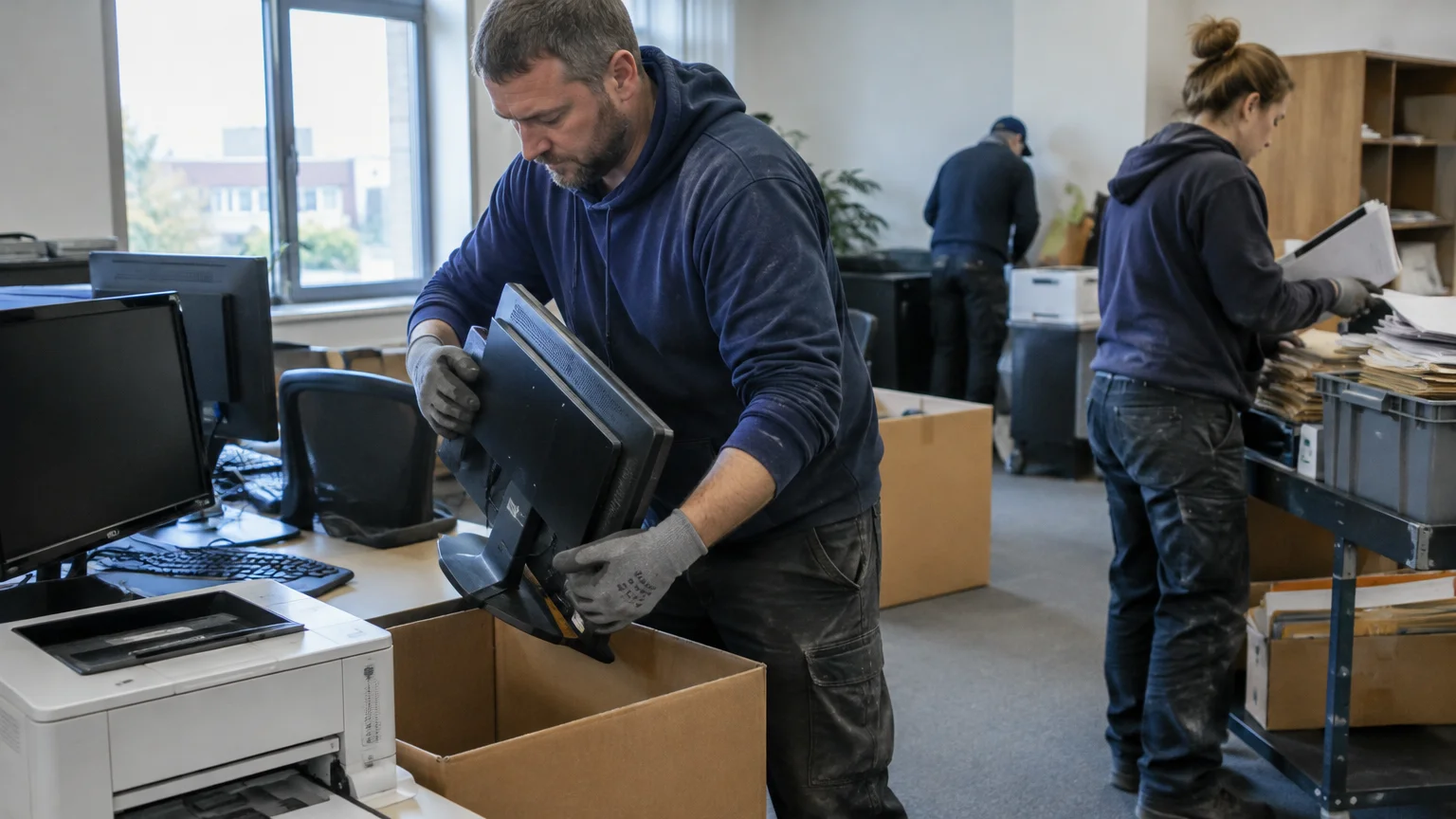
An office cleanout may include desks, chairs, filing cabinets, tables, shelves, and cubicle parts. A business might also need to clear old décor, supplies, broken furniture, or items from storage rooms. Some jobs include appliances, such as a break-room fridge, but ask first how those items can be handled.
A clear list helps everyone know what should leave. Mark approved items and label anything that must stay. If some furniture is still in good shape, staff can decide whether to reuse or donate it before planning the cleanout. Broken items may need a different plan from desks or chairs that can still be used.
How office junk hauling differs from routine waste removal
Routine waste removal usually takes everyday rubbish from regular business activity. A commercial junk haul is for bulky items, large loads, or a full office clearout. It can take more planning because of building access, shared halls, elevators, and the need to keep work areas safe.
A business may need to clear office junk before new furniture arrives or after a team moves. A property owner may need to clear an empty suite before showing it to new tenants. Bellingham WA Junk Removal can help local businesses talk through the work and plan for items that need special care.
When should a business schedule an office junk haul?
Schedule a junk haul when unwanted items block work, take up useful space, or must leave before a move or remodel. Planning early gives staff time to sort items and lets the building team prepare. It can also help limit work delays while the space is being cleared.
Office moves, renovations, and lease transitions
A move is a good time to review desks, chairs, and storage items. The business can decide what will go to the new space and what no longer serves a purpose. Sorting before moving day helps avoid carrying unwanted items to another office and clearing them later.
Renovations can also call for a cleanout. A contractor may need an open room for repairs or new fixtures. Before work begins, confirm what must be removed, what can stay, and when the room needs to be clear. Share any timing limits with the people doing the work.
Lease changes need careful planning, too. Property owners and tenants should agree on which items belong to the business and which are part of the building. They should check move-out rules and the date the office must be empty. A written list can help everyone follow the same plan.
Reducing clutter in active workplaces
A cleanout can help when extra furniture, old supplies, or broken items make rooms hard to use. A business does not need to wait for a major move. It can arrange a smaller removal when clutter fills meeting areas, storage rooms, or paths employees use each day.
Staff should not have to guess what can go. Ask team leads to review shared rooms and mark items that are still needed. Keep walkways open while sorting, and do not stack heavy items where they could fall. For ongoing clutter, set a simple routine to review unused items before they spread into more work areas.
How should you prepare an office for junk hauling?
Prepare an office by sorting items, protecting what must stay, and sharing clear details about the building. Good planning helps the crew work in the right areas and cuts down on questions. It also helps employees and property staff know what to expect during the cleanout.
Identify items for removal and items to keep
Walk through the office before the planned haul. Make a list of the furniture, equipment, and other items that should leave. Mark items that must stay with clear signs, and move small valuables or personal belongings away from the work area.
A simple sorting plan can include:
- Furniture and fixtures approved for removal.
- Electronics that need separate handling.
- Documents and files that must stay private.
- Items to keep, reuse, or give to another team.
- Items that need a review before anyone decides.
Do not wait until the crew arrives to make choices. Empty desks and cabinets that hold files or personal items. Choose one staff member to answer questions about unclear items and confirm what can go. That person can help keep the work on track.
Coordinate access, building rules, and employee communication
Tell the service team where the office is, what items are involved, and what access limits apply. Note stairs, elevators, loading areas, narrow doors, or rules for shared spaces. The building manager may need to approve a work time or reserve an elevator.
Let employees know which rooms will be cleared and what they should take from their desks. Share the plan with reception, security, and property staff when needed. If the business will stay open during the cleanout, agree on how workers and visitors can move around without entering the work area.
How are desks, cubicles, and bulky office items removed?
Desks, cubicles, and other large items are removed by planning how they will be taken apart, carried, and moved through the building. The right plan depends on the item, the route, and whether it can leave in one piece. Good preparation helps protect the office and shared areas.
Planning disassembly and safe movement
Some desks and cubicles must be taken apart to fit through a doorway or into an elevator. Point out built-in units, attached shelves, and workstations with cables or shared parts. Do not pull anything apart before checking whether it connects to equipment or work areas the office still uses.
Staff can help by clearing drawers and surfaces, removing personal items, and marking parts that should stay. Do not ask an employee to lift or take apart a heavy unit unless they are trained and it is safe. A professional crew can look at the item and plan how to move it along the route.
Protecting hallways, elevators, and shared spaces
Before work starts, clear the path from the office to the building exit. Move loose items out of halls and tell the crew about tight doors or corners. If the office shares space with other tenants, follow building rules for noise, access, and loading areas.
A property manager may ask for floor or wall protection in busy areas. Ask how the team plans to protect shared spaces and keep the work area tidy. Good planning matters in buildings with many tenants, where employees, visitors, and other crews may use the same halls.
How should businesses handle electronics and sensitive materials?
Businesses should separate electronics and private materials from general office junk before the haul. Computers, monitors, printers, and similar equipment may need special handling. Private files and stored data need their own safe plan, not a place in a general removal pile.
Separate electronics from general office junk
Set aside computers, screens, printers, phones, and other electronic equipment. Ask how these items will be handled and whether the business needs a separate electronics recycler. Do not assume every junk hauling service accepts every kind of electronic item.
Before equipment leaves, follow the business’s rules for data and devices. A staff member with the right skills or an IT provider can remove business data and confirm that the device is ready to leave. Keep cords, accessories, and equipment that will be used again in a separate, marked area.
Appliances also need a clear plan. If the office needs to get rid of a fridge, ask whether the service can take it and if it needs preparation. Remove food and loose items first. For anything with special disposal rules, check with the local waste authority or a suitable recycler.
Protect confidential records and workplace data
Do not put private files in a general junk pile. Keep paper records in a secure place and follow the company’s rules for keeping and destroying records. Staff should check drawers, cabinets, and boxes before approving them for removal.
Old devices may still hold digital information even after files are no longer visible. The business should use an approved process to wipe or destroy data before equipment leaves its control. If there is any doubt, ask the IT or records team to review the item first.
What affects the scope of a commercial junk haul?
The scope of a commercial junk haul depends on the amount and type of material, the building layout, and the timing. Sharing these details early helps the business and service team plan the right crew, access, and handling steps. The final plan should match the items and the conditions at the site.
Volume, item type, access, and scheduling considerations
The amount of furniture and other items is one part of the job. Removing a few chairs is different from clearing a whole office floor. Large items, heavy cabinets, cubicle walls, and appliances may also need more planning than loose office supplies.
Access can change the work plan. A ground-level suite with a clear loading area is different from an upper-floor office with limited elevator access. Stairs, long halls, set building hours, and shared entrances are all useful details to share before booking.
Timing matters as well. A business may need the work done before a lease deadline, remodel, or move. Share the date and any limits on when the crew can enter. If some items need special care, explain that early rather than waiting until removal day.
How to request a clear plan for an office cleanout
To get a clear plan, describe the items, the space, and the building rules. Photos or an item list can help explain the work. Mention electronics, appliances, heavy furniture, and anything that must not be removed.
Ask what the business needs to prepare, how access will work, and which items the service can take. A written plan can make each person’s role clear for the business, property manager, and removal team. Confirm the agreed work before the scheduled day, especially if the list or building access changes.
How can you choose a reliable commercial junk removal service?
Choose a commercial junk removal service that listens to the business, explains its plan, and answers questions about handling and building access. A good fit understands that an office cleanout is more than carrying items out of a room. It should be ready to discuss the needs of the site.
Questions to ask about planning, handling, and disposal
Ask how the team plans to move large items, protect shared spaces, and handle electronics or appliances. Check whether it accepts the listed items and can follow the building’s access rules. The business should also ask what must be ready before the crew arrives.
Useful questions include:
- Which items can the team remove from this office?
- How should staff prepare desks and cabinets?
- Can the team follow the building’s access rules?
- How are electronics and appliances handled?
- What should staff do with private records and data?
A clear answer is more useful than a broad promise. Share any special needs and ask who will confirm the item list. If the service cannot take an item, the business can arrange another suitable option before cleanout day.
Frequently Asked Questions
How do businesses get rid of old office furniture?
Businesses can sort furniture into items to keep, reuse, donate, or remove. A commercial junk haul may help clear large or broken pieces from the space. Before booking, list the items and check the building’s access rules. Remove files and personal belongings from desks and cabinets first.
Can a junk removal service take office electronics?
Some services accept office electronics, but the items they take and how they handle them can vary. Ask about computers, monitors, printers, and other devices before the cleanout. The business should also protect or remove its data through an approved process before equipment leaves the workplace.
How should a business prepare for an office cleanout?
Make a clear list of what should go and what must stay. Empty desks and cabinets, set aside electronics and private records, and tell employees which areas will be cleared. Share access details and building rules with the service team before the planned work.
Can an office cleanout include a break-room refrigerator?
It may, but ask the service whether it accepts appliances before setting the cleanout date. Empty the fridge and ask if it needs any other preparation. If it cannot be taken as part of the job, check with a local appliance recycler or waste authority about another option.
How can a business find junk removal near me?
A business can search for commercial junk removal in Bellingham and nearby areas. These include Fairhaven, Sunnyland, Ferndale, Lynden, Blaine, Everson, and other nearby communities. Compare services by asking about accepted items, access planning, electronics handling, and building rules. Sharing an item list helps a service understand the office’s needs before the cleanout.
Key takeaways
- A commercial junk haul can clear unwanted furniture, equipment, and other large office items.
- Sort items and protect private records before the crew arrives.
- Share building rules, timing needs, and special handling details early.
- Confirm that electronics and appliances can be accepted and handled as needed.
- A clear item list helps the business plan a smoother office cleanout.
Conclusion
An office cleanout works best when the business decides what should go, protects what must stay, and plans access in advance. A clear plan helps employees, property owners, and the removal team work together with less confusion. Bellingham WA Junk Removal can help businesses talk through their commercial junk haul needs. Contact us to plan an office cleanout.
If you are not sure what you are dealing with, it is worth having someone look at it before it turns into a bigger job. Get in touch with Bellingham WA Junk Removal today and we will tell you where you stand.