Appliance pickup FAQs help homeowners, property owners, and businesses plan for appliance removal. A pickup service may take refrigerators, washers, dryers, stoves, and dishwashers, depending on its rules. In Bellingham, check what the service accepts and how to prepare each item before arranging pickup. Clear paths and safe connections can help avoid delays and damage.
Old appliances can get in the way during a move, home update, or tenant change. Bellingham WA Junk Removal helps customers understand what to prepare and what questions to ask. The right plan depends on the appliance, where it is, and how the crew can reach it.
Table of Contents
- What appliances can be picked up?
- How should I prepare an appliance for pickup?
- Do appliances need to be disconnected before pickup?
- Can appliances be picked up from inside a home or business?
- What happens to appliances after pickup?
- Are there rules for disposing of refrigerators and other appliances?
- How do I choose an appliance pickup option?
What appliances can be picked up?
Pickup services often take large home appliances, but each provider sets its own rules. Common items include refrigerators, freezers, washers, dryers, stoves, and dishwashers. A service may take other bulky appliances too, so describe each item before you arrange a visit.
Which large household appliances are commonly accepted?
A crew may pick up an appliance from a home, rental, office, or other site. Some services take working and broken items, while others have limits. The appliance’s size, condition, parts, and location can all affect whether it is accepted.
Make a short list before asking about pickup. Name each appliance, say whether it works, and note where it sits. A freezer in a basement may need a different plan than a stove near an outside door. Clear details help the service plan for the crew and equipment.
Can businesses and property managers arrange pickup for multiple appliances?
Yes, many services can talk through a pickup with several appliances. This may help a landlord clear a unit or a business replace old equipment. Share how many items there are, what they are, and any limits on access.
For a large cleanout, list items by room or unit. A property manager could note a fridge in each empty apartment and a washer in a shared laundry room. Bellingham WA Junk Removal can help customers discuss which items may fit the pickup plan. Confirm what the service accepts before moving anything.
Businesses may also be planning an office cleanout faqs search or a retail removal faqs search while replacing equipment. The same clear list can help explain what needs to go. For house cleanout faqs, note appliances along with the rooms or areas where they are located. Confirm each item before the pickup is booked.
How should I prepare an appliance for pickup?
Start by emptying the appliance and clearing a safe path. Take out food, dishes, clothes, and loose parts. Ask the pickup service what it needs before you move or take apart anything.
What should I do before removing a refrigerator?
Remove food and take out shelves or bins if the service asks. Wipe up spills and keep the doors from swinging while the fridge is moved. Do not leave food or loose items inside for the crew to handle.
Keep children and pets away from the work area. Clear rugs, boxes, and small items from the path to the exit. If doorways or turns look tight, measure them and tell the service before pickup.
A refrigerator door can close and trap a child or pet. Keep the appliance secure and out of reach while it waits for removal. Follow the maker’s directions for safe storage and handling.
Do washers, dryers, stoves, and dishwashers need special preparation?
Empty washers and dryers, and take loose items out of their drums. Remove food and cookware from the stove or oven. Take dishes out of a dishwasher and check for water inside. These steps help with handling, but they do not replace safe disconnection.
Leave hoses, cords, and attached parts in place unless the service says otherwise. Do not cut wires or force an appliance out of a cabinet. If a unit is built in or hard to reach, take photos to show its setup when you arrange pickup.
Do appliances need to be disconnected before pickup?
An appliance often needs to be disconnected before it can move, but the crew’s role can vary. Water, gas, or electrical connections may need a qualified person. Ask who will handle them before pickup, and do not touch a connection that seems unsafe.
Who should disconnect water, gas, or electrical connections?
Do not assume a removal crew can disconnect every appliance. Gas lines, wired-in power, and plumbing may need a qualified professional. Check the appliance directions and local rules, then ask the service what should be ready.
Unplugging an appliance may be simple when it has a normal plug and the area is dry. Do not touch a plug, wire, or outlet that is wet, damaged, hot, or hard to reach. Ask a qualified person to check it instead.
A washer or dishwasher may have water lines that can leak if handled the wrong way. A gas stove needs extra care near its gas line. If you are not sure what type of connection it has, stop and get qualified help before moving it.
What should I check before moving an appliance?
Check that the appliance is empty and disconnected when needed. Look for sharp edges, loose parts, water, and a clear path. Keep other people away while the appliance is being handled.
Large appliances can be heavy and hard to hold. You do not need a professional for simple jobs like taking out food, wiping a surface, or clearing a path. But moving a heavy item, handling a gas line, or dealing with a damaged connection needs trained help and proper tools.
Can appliances be picked up from inside a home or business?
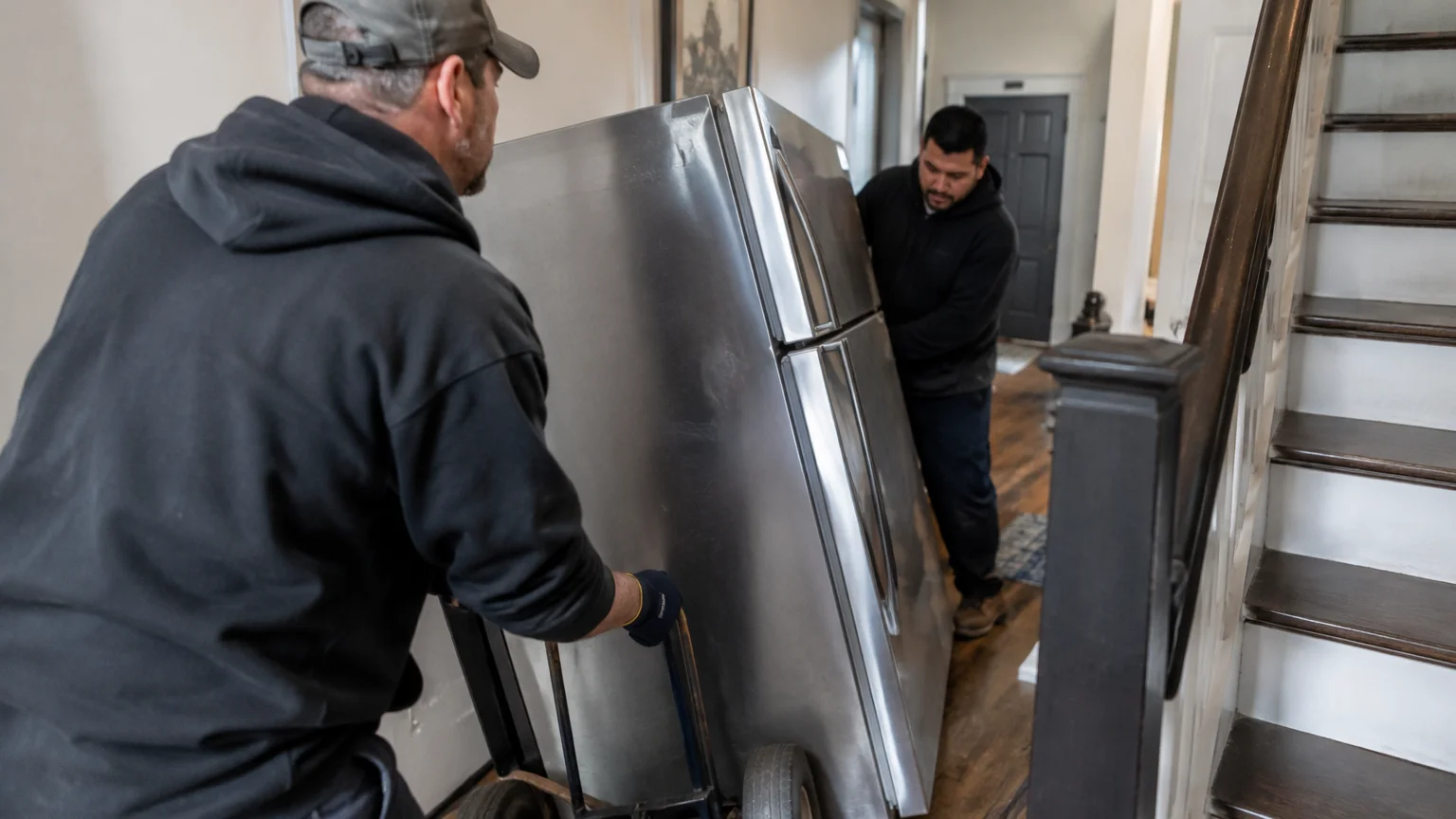
Many services can remove appliances from inside a building if the route is safe and the service agrees. Stairs, narrow halls, elevators, locked doors, and long walks can affect access. Share these details before you set the pickup plan.
What access details affect pickup planning?
Tell the service where the appliance is and how the crew can get to it. Mention stairs, tight turns, low ceilings, parking limits, gates, loading docks, or elevator rules. For an office or store, explain any check-in steps and work-hour limits.
Clear the route before the crew arrives. Move small furniture, boxes, and rugs if it is safe. Do not try to move a heavy appliance alone to make pickup easier. Tell the service if the item is built in, stuck, or above or below the main floor.
Photos can show a tight space or an unusual setup. They may also help the service ask clear follow-up questions. A good plan can prevent delays and help protect walls, floors, and the appliance.
How can property owners prepare for appliance removal between tenants?
Property owners can list each appliance that needs to go and note its condition. Check every room, storage area, and shared space. Arrange access for the crew and mention tenant schedules or building rules.
For several empty units, group the list by unit or room. Mark appliances that are still connected, built in, or hard to reach. A clear list helps the property team and pickup service agree on the work before the visit. Keep shared halls and entryways clear for other residents.
Businesses can use the same plan when replacing break-room or laundry equipment. Set aside only items approved for removal, and tell staff which areas must stay open. Good preparation helps the pickup fit the site’s needs.
What happens to appliances after pickup?
After pickup, an appliance may be checked for reuse, recycling, or disposal. The next step depends on its condition, parts, materials, and local options. Ask the service how it handles each type of appliance.
Which parts and materials may be recycled?
Appliances may contain metal, plastic, glass, wires, and other materials. A recycling site may separate some parts to recover them. The exact process depends on the appliance and the site that receives it.
Refrigerators and freezers need special care because they may hold refrigerants. A refrigerant is a substance that helps move heat in cooling equipment. It must be handled by people and sites set up for that work. Do not cut cooling lines or take a fridge apart yourself.
A service may sort appliances or take them to a suitable site, but each service may work differently. Ask where the items go and if parts may be reused or recycled. This helps you understand the process without assuming every appliance follows the same path.
When might an appliance be donated or disposed of?
An appliance that works well may be right for reuse if a receiving group wants it. A broken, unsafe, or incomplete item may go to a recycling or disposal site instead. Donation rules vary, so do not assume a group will accept an item.
The service can explain which options may work for your appliance. It may ask about age, condition, missing parts, or damage. Check with a donation group before leaving an appliance at its site. It may not accept the item, and an unattended appliance can create a safety problem.
Are there rules for disposing of refrigerators and other appliances?
Yes, disposal options may depend on the appliance and local rules. Refrigerators and freezers may need special handling because of refrigerants and other parts. Check with the local waste authority or ask the pickup service how it follows local rules.
Why do refrigerators and freezers require special handling?
Cooling appliances may hold refrigerants and have parts that should not be damaged or released. A trained handler can send them through the right process. Keep the unit whole; do not remove sealed parts, cut lines, or try to drain it yourself.
Some refrigerators have doors, shelves, or other parts that can create risks while the unit waits for pickup. Keep the area secure and follow the maker’s directions. If the appliance is damaged or leaking, keep people away and ask a qualified service what to do.
How can I check local disposal requirements?
Start with the local waste or recycling authority for Bellingham and Washington. Rules and drop-off choices may differ from one place to another. The appliance maker may also give safe handling advice for a certain model.
Ask a pickup service how it handles refrigerators, freezers, and other appliances. Find out if the items may go to a reuse, recycling, or disposal site. If an appliance has a special feature or unusual material, mention it before pickup so the service can check its options.
How do I choose an appliance pickup option?
Choose a service that accepts your appliance, explains how to prepare it, and can work with the site’s access needs. Ask who handles disconnection and where the items go after pickup. The job can depend on appliance size, number of items, stairs, distance to the exit, and any special handling needs.
What should I ask when comparing pickup services?
Ask if the service accepts each appliance and can remove it from inside the building. Confirm what needs to be disconnected, emptied, or moved before the crew arrives. Ask how the service handles refrigerators and other appliances that may need special care.
It also helps to discuss timing, building access, and any limits on the pickup. For a business or rental property, ask how to group items from different rooms or units. Clear answers help you understand what the service will do and what you need to prepare.
The work can change based on the number and type of appliances, access, and handling needs. Ask the service to review these details before you confirm a plan. This helps everyone understand the job without guessing.
How can I get clear answers before pickup?
Share a full list of appliances, their condition, and where they are located. Mention stairs, narrow doors, built-in units, and connection types. Photos can help explain details that are hard to put into words.
Key takeaways
- Check which appliances the service accepts before arranging pickup.
- Empty appliances and clear the route, but avoid unsafe connections.
- Ask a qualified professional about gas, water, or wired-in connections.
- Check local guidance for refrigerators and other items needing special care.
- Explain access limits and list each appliance that needs removal.
Frequently Asked Questions
How do you get rid of a refrigerator? Empty it, keep it whole, and arrange pickup or another option that follows local rules. Ask how the refrigerator will be handled, as cooling parts may need special care. Do not cut lines or remove sealed parts. Keep the unit secure while it waits for removal.
How should someone dispose of old appliances? First check what the local waste authority accepts. Then look at reuse, recycling, and pickup options for the appliance. Ask if it must be disconnected or prepared in a certain way. A pickup service can explain its process, but accepted items and steps may vary.
Can a pickup service remove a broken appliance? Many services accept some broken appliances, but check first. Describe the item, its condition, and any missing or damaged parts. A broken refrigerator may need special care. Do not try to repair or take apart an appliance just to prepare it.
Can a pickup crew take appliances from inside a building? Some services can remove appliances from inside if the route is safe and the service agrees. Share details about stairs, narrow halls, elevators, and parking. Ask if the appliance needs to be disconnected first. Do not move a heavy item outside by yourself.
Can a property manager arrange removal of several appliances? Yes, a property manager can ask about taking several items in one visit. Make a list by unit or room and note access limits and connection needs. Confirm each item is accepted and ask how to prepare the site. A clear plan helps the crew understand the work.
Conclusion
A good appliance pickup plan starts with a clear item list, safe preparation, and a check of local rules. You do not need a professional for simple tasks like emptying a fridge or clearing a path. Get qualified help for unsafe connections or heavy moving. Bellingham WA Junk Removal can help you plan appliance pickup. Contact us to discuss your pickup needs.