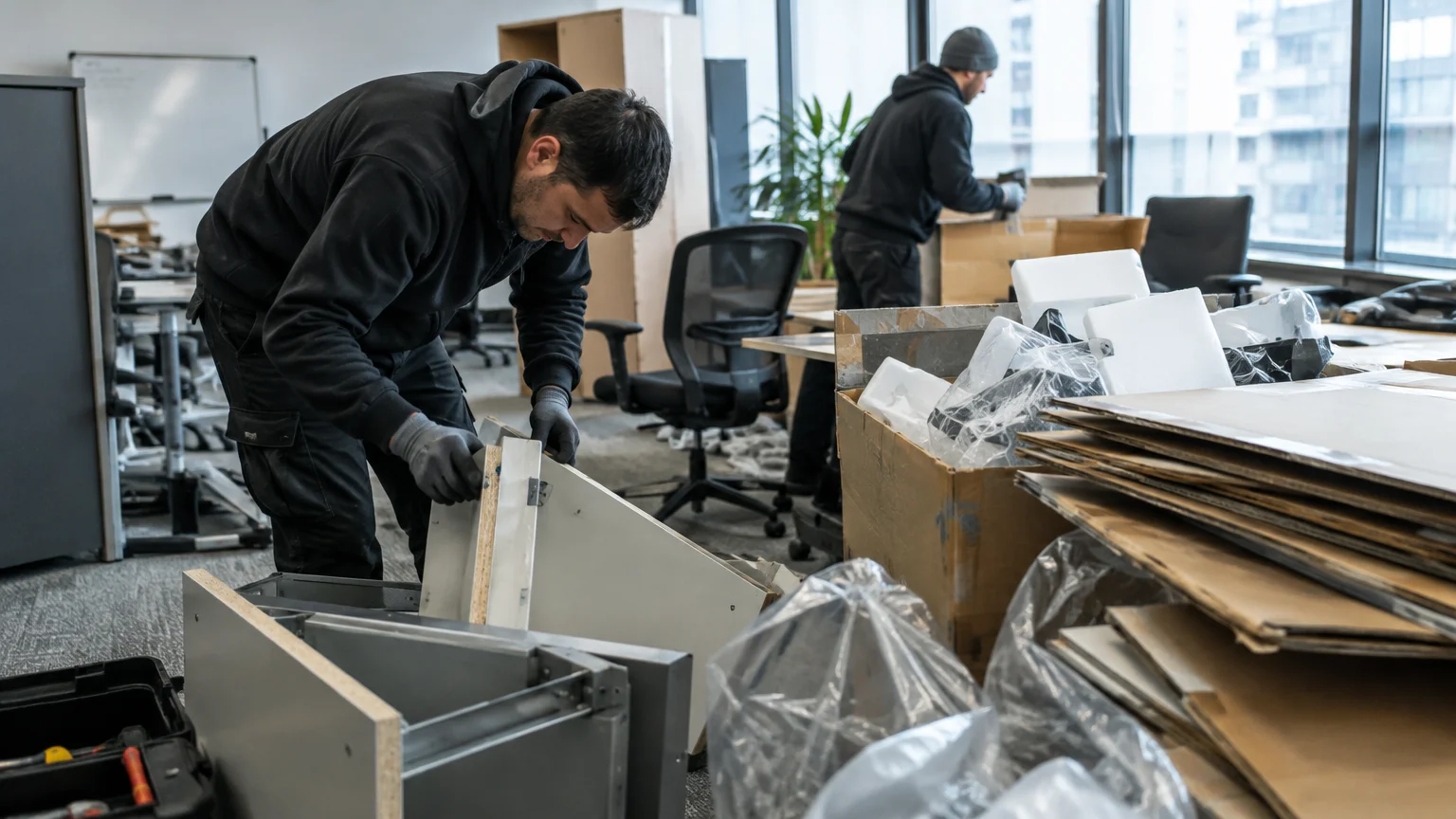
An office furniture removal service takes away desks, chairs, cubicles, tables, shelves, and other workplace items. The crew may sort, take apart, carry, load, and route furniture for reuse, recycling, or disposal. In Bellingham, the work depends on the items, building access, safety needs, and cleanout plan.
For a small office move or a full workplace closure, old furniture can slow down the next step. Desks can block walkways, while cubicle panels can fill storage rooms. Large conference tables may not fit through doors or elevators. A planned removal service helps owners and property managers clear these items in an orderly way.
Table of Contents
- What Does an Office Furniture Removal Service Include?
- Can Desks, Cubicles, and Conference Tables Be Removed?
- How Are Office Furniture Removal Jobs Prepared?
- Does Office Furniture Removal Include Disassembly and Heavy Lifting?
- What Happens to Office Furniture After Pickup?
- How Can a Business Plan an Office Furniture Removal Job?
- When Should a Business Schedule Office Furniture Removal?
- Frequently Asked Questions
What Does an Office Furniture Removal Service Include?
An office furniture removal service often includes sorting, carrying, loading, and removing unwanted workplace furniture. Many crews also handle simple disassembly. They may separate items that can be reused or recycled. Tell the business what needs to go before the crew arrives.
Office furniture removal can cover desks, chairs, filing cabinets, bookcases, cubicles, reception counters, tables, shelves, and storage units. Some crews also remove break-room furniture, mattresses from staff housing, and bulky items from storage areas. The service area may include offices, stores, warehouses, and commercial buildings around Bellingham, including Fairhaven and Sunnyland, as well as nearby communities.
Which types of workplace furniture can be removed?
Most common office furnishings can be removed when they are safe to handle. These may include:
- Desks, standing desks, and computer workstations
- Cubicle walls, panels, and attached work surfaces
- Conference tables, meeting tables, and reception desks
- Filing cabinets, bookcases, shelving, and storage units
- Office chairs, waiting-room seats, and break-room tables
The crew may ask about size, weight, condition, and location. Items attached to walls, floors, or electrical systems need more planning. Built-in cabinets and fixtures may need a contractor instead of a standard junk removal crew.
How does the removal process work from start to finish?
The process often starts with a review of the items and building. The crew checks entrances, halls, elevators, stairs, loading areas, and parking rules. Workers then protect nearby surfaces, take apart suitable items, move the pieces, and load them for the next step.
A business can work with Bellingham WA Junk Removal to plan an office cleanout. Clear details help the crew bring the right tools and use a safe route. The goal is to remove unwanted furniture without creating extra work for staff or building managers.
Can Desks, Cubicles, and Conference Tables Be Removed?
Yes, desks, cubicles, conference tables, and reception furniture can often be removed during a commercial furniture pickup. The crew first checks how each item is built and how it can leave the building. Large pieces may need to be separated before they fit through doors or elevators.
Office furniture can look simple but still create moving problems. A desk may have a heavy metal frame. A cubicle may connect to several panels. A conference table may be too wide to turn in a hall. Careful planning helps prevent damage to walls, floors, doors, and the furniture.
How are desks and workstations handled?
Desks and workstations should be cleared of office supplies before removal. Drawers should be emptied, and staff or the information technology team should remove computers. The crew can then check the frame, legs, shelves, and attached parts.
Some desks can move as one piece. Others must be taken apart. Workers may remove legs, keyboard trays, shelves, and modesty panels when these parts block safe movement. Keep screws and small parts with the item only when the furniture will be saved for later use.
What happens to large conference tables and reception furniture?
Large tables and reception counters need a wider route and more planning. The crew may measure doorways, check the elevator, and review building rules before moving them. In some cases, the top, legs, panels, or storage sections must be separated.
Reception furniture can include glass, stone, metal, or built-in wiring. These materials need careful handling. Items joined to walls or floors should not be pulled loose without approval from the owner or a qualified contractor. Bellingham WA Junk Removal can help businesses decide which items are ready for removal and which need another service.
How Are Office Furniture Removal Jobs Prepared?
A business should decide what stays, what goes, and who can approve removal. Staff should remove personal items, documents, electronics, and anything with private information. The clearer the plan, the easier it is for the crew to work without stopping at every item.
A cleanout service helps remove unwanted items from a set space. This may be an office, storage room, or whole building. It can include furniture, boxes, fixtures, and general junk. Businesses may use one for a move, remodel, closure, lease handoff, or workspace change.
What should a business do before the removal crew arrives?
Mark items for removal with clear signs or labels. Empty drawers, cabinets, and shelves. Important records should go through the company’s approved shredding process, not into a general furniture load.
Useful preparation steps include:
- Create a simple list of furniture that needs to go.
- Remove computers, monitors, phones, and other electronics.
- Clear drawers, shelves, cabinets, and desk surfaces.
- Tell the building manager about the planned pickup.
- Reserve loading space or elevator access when required.
- Keep employees and visitors away from the moving path.
Businesses should also check whether furniture belongs to a landlord, leasing company, or another tenant. Removing the wrong item can cause delays and disputes.
Which access and safety details affect the job?
Access details can affect how safely furniture moves. Narrow halls, stairs, locked doors, low ceilings, parking limits, and busy public areas all matter. The crew may need another route or a set loading time.
Mention glass, sharp edges, unstable shelves, water damage, mold concerns, and damaged floors. Staff should not move heavy furniture through crowded areas. Employees can safely clear small items, but trained workers should handle heavy lifting and awkward carries.
Does Office Furniture Removal Include Disassembly and Heavy Lifting?
Many office furniture removal services include simple disassembly and heavy lifting. The exact work depends on the item and the site. Workers may take apart desks, cubicles, shelves, and tables when this makes removal safer. Furniture with built-in wiring, plumbing, or permanent fixtures may need another professional.
Disassembly means taking an item into smaller pieces for moving. It is not the same as taking apart a building fixture. A crew may remove bolts, legs, panels, and shelves. It should not cut live wires or disconnect complex systems without proper training.
When does furniture need to be disassembled?
Furniture often needs disassembly when it cannot pass through a doorway, fit in an elevator, or turn safely in a hall. A large desk may need its legs removed. A cubicle may need its panels separated. A conference table may need its top divided from the base.
The crew may use hand tools for common fasteners. Rusted bolts or damaged parts may need more time and care. Do not force a stuck item apart. This can damage the building or create sharp edges.
How are bulky or difficult-to-move items handled?
Bulky furniture is handled by planning the route, protecting surfaces, and using enough workers. The crew may use straps, dollies, ramps, or other tools suited to the item. Heavy cabinets should stay closed, and drawers should be secured during movement.
Employees can help by keeping the route open and showing the crew the correct items. They should not lift large furniture without training. When a piece is unsafe, unstable, contaminated, or attached to a building system, describe the issue before scheduling removal.
What Happens to Office Furniture After Pickup?
After pickup, office furniture may be sorted for reuse, donation, recycling, or disposal. The next step depends on the item’s condition, material, local rules, and receiving facilities. Good furniture may have another use, while damaged pieces may need recycling or disposal.
A removal crew cannot promise that every item will be donated. Furniture may have water damage, broken frames, missing parts, stains, or unsafe materials. Some facilities also reject items that are too large or hard to process. Ask how the service handles usable and unusable pieces.
Which items may be donated, reused, or recycled?
Clean desks, chairs, shelves, and tables may be suitable for reuse when they are safe and complete. A nonprofit, resale outlet, reuse center, or community group may accept them. The receiving group decides whether it can use the items.
Metal filing cabinets and some desk frames may go to a metal recycling facility. Cardboard packaging and some plastics may also be sorted. Mixed furniture can be harder to recycle because wood, metal, foam, glass, and glue may be joined together.
How are damaged or unusable furnishings disposed of?
Broken or badly damaged furniture may go to a facility that accepts bulky items. The crew should separate items that need special handling from normal furnishings. Paint, chemicals, batteries, fluorescent lamps, and other hazardous materials should not go into a regular furniture load.
Businesses may also need special help with appliances. Ask whether the cleanout crew handles refrigerators or microwaves, since local rules may apply. The same is true for mattresses, electronics, and construction debris. Clear sorting helps prevent rejected loads and unsafe handling.
How Can a Business Plan an Office Furniture Removal Job?
A business can plan removal around a move, remodel, lease, or closure date. First, list the furniture and mark anything needing special care. Then confirm access, building rules, and the best removal window.
This plan also helps compare one furniture pickup with a larger cleanout. Furniture may be spread across offices, basements, attics, or storage rooms. Ask whether one crew can handle the full job. This can help reduce repeated disruption.
What should a business include in its removal plan?
The plan should list rooms, furniture types, access points, and items that must stay. Note stairs, elevators, loading zones, security desks, and time limits. Photos can help explain large or unusual pieces before the appointment.
A strong plan includes:
- A room-by-room list of furniture for removal
- A clear mark for items that must remain
- Notes about stairs, elevators, parking, and loading access
- Details about glass, wiring, fixtures, or damaged items
- A contact person who can make decisions on site
Confirm what happens to documents, electronics, appliances, and hazardous materials. These items often follow different rules than desks or tables.
How can businesses compare removal options?
Businesses should compare the service scope, not just the short service name. A full-service junk removal company may offer sorting, lifting, loading, and removal in one visit. Another provider may only drop off a container or accept items at a facility.
Ask whether the crew handles cubicles, whether basic disassembly is included, and whether workers remove furniture from inside the building. Also ask how donations and recycling are handled. These details show whether the service fits the cleanout.
When Should a Business Schedule Office Furniture Removal?
A business should schedule office furniture removal before a move, remodel, closure, lease handoff, or major workspace change. Early planning gives time to sort records, remove electronics, reserve elevators, and tell employees what to expect. Urgent help may be needed when furniture blocks access or delays a property turnover.
Common reasons include:
- Moving into a smaller or larger office
- Replacing old desks, chairs, or cubicles
- Closing a location or ending a lease
- Clearing space before construction or painting
- Preparing a vacant property for a new tenant
- Removing furniture after a storm, leak, or other damage
Which business changes commonly require furniture removal?
Downsizing often leaves extra desks, chairs, and storage units. A remodel may require furniture to leave before workers repair floors or walls. A business closure may involve a full office cleanout, including reception areas, meeting rooms, storage spaces, and break rooms.
Property owners may also need removal after a tenant leaves items behind. The owner should follow the lease and local legal process before disposing of property. A removal company can handle the physical work after the owner has permission to proceed.
How can a business choose the right removal service?
The right service should match the furniture, building, schedule, and disposal needs. Ask clear questions about heavy lifting, disassembly, access, recycling, and items not accepted. Share accurate details instead of assuming every item fits standard removal.
Bellingham WA Junk Removal serves businesses, property owners, and nearby parts of the Bellingham area. A clear talk before the appointment can help prepare the space and avoid confusion on removal day.
Frequently Asked Questions
Can an office furniture removal service remove cubicles?
Yes, many office furniture removal services can remove cubicle panels, work surfaces, brackets, and related parts. Cubicles may need simple disassembly before passing through doors or elevators. Mention the number of workstations, their layout, and any attached wiring before scheduling.
Can old office furniture be donated?
Some clean and usable office furniture may be donated or reused. Acceptance depends on the item’s condition, size, material, and the group’s current needs. Broken, stained, unsafe, or incomplete furniture may not qualify. The removal crew can explain sorting options, but no donation outcome is guaranteed.
Does furniture removal include moving items from inside the office?
Many full-service removal crews carry furniture from inside the building. The exact work varies. Ask about stairs, elevators, long halls, loading areas, and furniture needing disassembly. Clear site details help the crew plan a safe path and bring the right tools.
What should happen to computers and office electronics?
Computers, monitors, phones, printers, and other electronics should be separated from ordinary furniture. The information technology team should remove data and follow the company’s approved electronics process. Some junk removal services accept electronics, while others direct them to a special recycler. Confirm this before pickup.
Can one service remove office furniture and other junk?
A full-service junk removal company may handle office furniture along with boxes, shelves, mattresses, appliances, or general cleanout items. Acceptance rules vary by provider and local facility. Make a complete list before booking so the crew can confirm whether one visit fits the planned removal.
Key Takeaways
- Office furniture removal can include sorting, lifting, loading, and simple disassembly.
- Desks, cubicles, tables, chairs, shelves, and reception furniture are common items.
- Businesses should remove documents, electronics, and personal items before pickup.
- Access, stairs, elevators, loading zones, and building rules affect the plan.
- Usable furniture may be reused or donated, while damaged items may be recycled or disposed of.
Conclusion
An office furniture removal service can help businesses clear desks, cubicles, tables, storage units, and other bulky items. Good results start with a clear list, safe access, and a plan for electronics, documents, and special materials. Early scheduling also helps protect the workday and prepare the space for its next use.
Contact us today to plan office furniture removal with Bellingham WA Junk Removal.