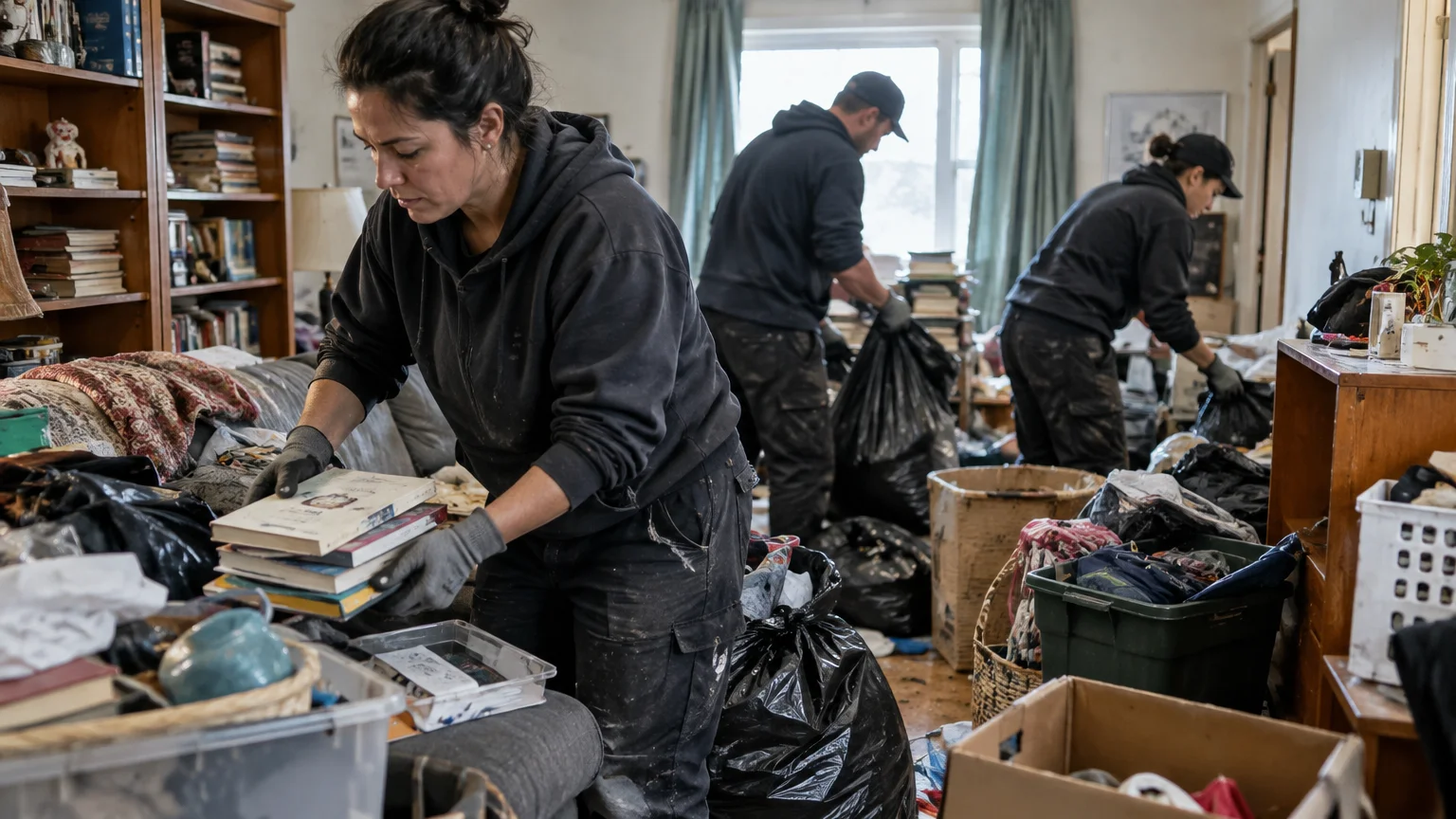
Hoarding cleanup FAQs help families understand how a home cleanout works, what can affect its scope, and what may happen next. The work often starts with a careful review, followed by sorting and agreed item removal. In Bellingham, a clear plan can help protect people, belongings, and the home.
How much does hoarding cleanup cost?
The cost of hoarding cleanup depends on the amount and kind of material, the home’s layout, access, and any safety concerns. Clearing one room with open paths differs from clearing a packed home with heavy items or blocked exits. The final cost is confirmed on a quote after the work and property have been reviewed.
What factors affect the scope of a cleanup?
The team first needs to know which rooms need work and what items should stay. They may also check for stairs, narrow paths, hard-to-reach areas, and large or heavy items. These details help show how much work is needed and how items can be moved out safely.
The type of material matters, too. Old furniture, broken furniture, and appliances may need different steps. The crew can explain whether it can remove a refrigerator or another appliance as part of the job. Concrete pieces, chemicals, and other special materials may need separate handling or help from a qualified provider.
The home’s condition is another part of the review. Leaks, pests, mold, damaged floors, or blocked exits may need extra care. The cleanup crew can explain what it can remove and when another skilled worker should check the property.
How does hoarding cleanup differ from a standard cleanout?
A standard cleanout often centers on taking unwanted items out of a property. Hoarding cleanup may also call for careful sorting, clear paths, and regular talks with the person or family. Not every item should be treated as junk. When possible, the person should help decide what stays.
Bellingham WA Junk Removal can help property owners understand the work before it begins. A clear plan can separate item removal from repairs, deep cleaning, or other work. It also helps families know which choices need to be made first.
How long does a hoarding cleanup take?
The time needed can change with the home’s size, the amount of material, and how easy it is to reach each area. One room may take less time than a full home with packed spaces or blocked paths. The schedule is best set after someone reviews the property and the work.
What can affect the cleanup timeline?
The amount of sorting and removal is one key factor. Work may take longer when rooms are hard to reach, items are heavy, or the home has safety concerns. Some waste needs special care instead of regular junk removal, which can also affect the plan.
Family choices can affect the pace, too. If belongings have personal or legal value, decide who can approve their removal before work starts. This can help prevent delays and lower the chance of removing something important by mistake.
How can planning help the work go smoothly?
Before the crew arrives, the person or family can mark items that must stay. They can also gather papers, photos, keys, and medicines in a safe place. It helps to choose who will answer questions while the work is underway.
A useful order is to make safe paths first, sort items that need a choice, and then remove approved items. This can open walkways without rushing personal decisions. It also helps the team notice areas that may need separate cleaning or repair.
Reviewing hoarding cleanup FAQs can help families plan the sorting and removal of household belongings. For a home cleanout, the team should focus on household items and belongings the family has approved. Bellingham WA Junk Removal can talk through a step-by-step plan that fits the home and the person’s needs.
How is a hoarding cleanup handled safely and compassionately?
A safe, caring cleanup starts with a review of the home and a respectful talk about the person’s goals. The team should look for hazards, agree on what may be removed, and keep paths clear when possible. The person should be part of the choices, rather than finding that belongings were removed without their knowledge.
What safety concerns should be assessed first?
The team should look for blocked exits, piles that may fall, sharp objects, pests, and signs of water or building damage. These issues can make it unsafe to enter or move items. A qualified worker may need to check serious hazards before cleanup can go on.
Workers should use the right safety gear and handle each kind of material with care. Chemicals, medical waste, and other hazardous items should not go into ordinary junk removal. If an item needs special handling, the team should arrange the right kind of service.
Homeowners do not need a professional for every small task. They can sort items in a clear, well-lit space, label boxes, and list belongings to keep. They should not climb unstable piles, lift heavy items alone, or handle unknown chemicals or sharp waste.
How can the person and their belongings be treated with respect?
Ask the person what matters most and how they want choices to be made. A simple keep, remove, and review system can help everyone stay clear on the plan. Items marked for review should stay in place until the person or chosen decision-maker has time to decide.
A calm pace and clear talks can make the process easier. The team should avoid blame, protect the person’s privacy, and explain each step in plain words. Hoarding junk removal works best when it respects the person’s choices and helps make more space safe to use.
What happens after a hoarding cleanup?
The next steps depend on the home’s condition and what the owner hopes to do. The property may need basic cleaning, repairs, or a separate safety check before it is ready to use. A cleanout does not fix damage or make every room safe by itself.
What steps help make the property usable again?
Once the agreed items are gone, the owner can check floors, walls, plumbing, and paths for damage. Deep cleaning or repairs may be needed before rooms can return to their usual use. If the home is part of an estate or foreclosure, the owner may also need to plan for an inspection, sale, or handover.
A helpful next-step list may include:
- Set aside important papers, valuables, and personal keepsakes.
- Arrange cleaning or repairs for areas that need work.
- Check that doors, exits, and walkways are clear.
- Plan how useful items will be kept in order.
Hoarding cleanup needs can vary, so families should describe the household items and areas they want cleared. They can also ask which materials the team accepts and which need another service. This helps everyone understand the plan before removal begins.
What should owners or families consider before the cleanup begins?
The owner or family should decide who can approve item removal and who will be there. They should also put private papers, medicines, and items with legal or family value in a safe place. If the home was inherited, check with the person managing the estate before discarding belongings.
Frequently Asked Questions
How can someone get rid of an old refrigerator?
Use a service that accepts appliances and follows local disposal rules. The owner should remove food and ask how to prepare the appliance for pickup. If the refrigerator is part of a larger hoarding cleanup, the team can say whether it can take it with other approved items.
How should broken furniture be removed?
Broken furniture may be removed with other household junk, but its size and condition matter. Keep people away from sharp edges and avoid moving heavy pieces alone. A cleanup crew can review the path and removal needs before work starts.
Can a cleanup team remove concrete chunks?
Some junk removal teams accept small amounts of concrete, while others do not. Concrete is heavy, so its amount, size, and location matter for safe handling. Describe the material clearly and check whether the crew can take it before adding it to the plan.
Does the home need to be empty before cleanup starts?
No, the home does not have to be empty before cleanup begins. The person and team can agree on what stays, what goes, and what needs more thought. Clear paths and a safe place for important belongings can help the work move ahead.
Conclusion
A thoughtful plan can make a difficult property cleanout easier to manage. It should account for safety, personal choices, item removal, and any repairs that may follow. Bellingham WA Junk Removal helps property owners learn about hoarding cleanup options and decide what steps may fit their situation.
Key takeaways
- The home’s contents, access, and condition shape the work and timing.
- Families should agree on what stays before removal begins.
- Serious hazards may need a check by a qualified worker.
- Cleanup and repairs are separate steps, and both may be needed.
Find out more about our estate cleanout in Bellingham. Contact us to discuss a hoarding cleanup plan for the property in Bellingham.