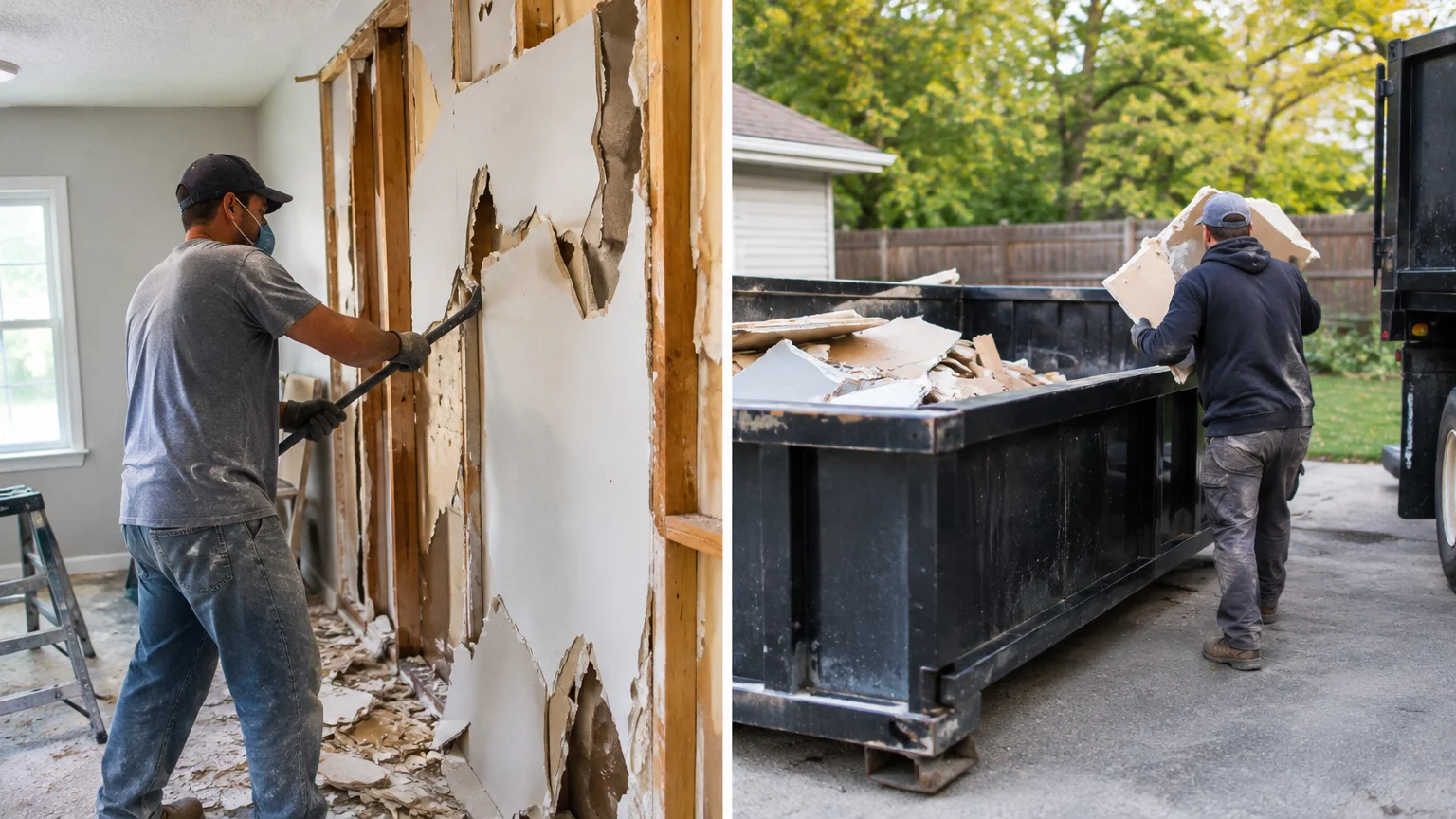
Drywall removal vs dumpster rental depends on the project, debris amount, schedule, and available space. Professional removal handles the lifting and loading for you. A dumpster can work well when a crew loads waste over several days. The right choice keeps renovation cleanup safe, simple, and on schedule.
Is drywall removal or dumpster rental better for renovation cleanup?
Professional drywall removal often works best for smaller projects, tight spaces, and quick cleanup. A dumpster may suit larger renovations that create waste over several days. The better choice depends on who will load the debris and how soon the space must be clear.
How each option handles drywall, plaster, and mixed construction debris
Drywall is made of gypsum panels with paper on both sides. During a remodel, it may come down with nails, screws, insulation, trim, wood, plaster, or other waste. Mixed construction debris means two or more building materials placed together for removal.
A hauling crew can remove loose drywall, broken plaster, wood scraps, and many other job site materials in one visit. This helps contractors and property owners avoid sorting every piece before pickup. The crew can clear rooms, hallways, garages, and outdoor work areas after tear-out work ends.
A dumpster gives the renovation team a place to put waste while work continues. It may fit a project where the crew loads debris each day. The team must still cut down large pieces, carry the material, and keep the area around the container safe.
Not every material belongs in the same container. Paint, chemicals, asbestos materials, propane tanks, and some appliances may need special handling. Ask the selected provider what it accepts before the project begins.
What to consider about project size, timeline, and available space
A small bathroom update may not create enough waste to need a container on the property. A whole-home renovation may create steady debris and need a larger plan. The number of rooms, material types, and work speed all matter.
Timing can also change the answer. A dumpster stays on-site during an approved rental period. A removal crew clears the material during a planned visit. If the property must be ready for tenants, buyers, or the next trade, direct hauling may help prevent delays.
Space is another key concern. A dumpster needs a safe area with enough room for delivery and pickup. Narrow driveways, shared parking, soft ground, and low branches can cause problems. Bellingham WA Junk Removal can help property owners review the cleanup plan and choose a practical service.
How much does drywall removal cost compared with a dumpster?
There is no single answer because each project has different labor, access, and disposal needs. Dumpster rental often depends on container size, rental time, delivery, pickup, and disposal rules. Professional removal often depends on debris type, amount, access, labor, and the number of loads.
What affects the price of junk removal and dumpster rental
Volume is the first cost factor. A few sheets of drywall need less hauling than debris from a full demolition. Heavy materials such as concrete, brick, and tile can also change handling and disposal needs.
Labor is another major factor. With a dumpster, the property owner or crew usually handles lifting and loading. With professional junk removal, the hauling team handles the heavy work. This can help when workers need to focus on skilled renovation tasks or when the owner cannot safely lift debris.
Access can change the work as well. Long carries, stairs, narrow halls, elevators, and limited parking may take more time. The provider may need details about the material and work area before confirming the job.
The schedule matters too. A container left on-site may involve a rental period. A hauling appointment focuses on removing waste during a planned visit. Neither option has the same cost for every project, so a clear description helps the provider explain the charge before work begins.
Which service offers more predictable project costs?
A dumpster may make planning easier when the project has a known debris stream and a crew can load it. Extra time, added containers, overfilled loads, or restricted materials may still change the final amount.
A removal service may be easier to plan when debris is already separated and ready for pickup. The team can review the load, access, and labor needs before the appointment. This may reduce problems caused by poor placement or a lack of loading help.
Property owners should compare the full project effort, not only the container or pickup charge. That effort includes worker time, lifting, moving debris, cleanup, driveway use, and schedule risk. A lower service price may not lower the total project cost when skilled workers lose hours carrying waste.
For a local plan, Bellingham WA Junk Removal can review the material list and access details with the customer. This can help contractors working across the main Bellingham area, including Fairhaven, Sunnyland, Ferndale, Lynden, Blaine, Everson, and nearby job sites.
What are the differences in convenience, loading, and scheduling?
The biggest difference is who does the physical work. A dumpster provides the container, while a removal crew provides the container and labor. This affects safety, work speed, and how clean the property looks after renovation work.
Who handles the lifting, loading, and job site cleanup?
With a dumpster, the renovation crew carries drywall from the work area to the container. Pieces may need to be cut down, stacked, and loaded by hand. The crew also needs to keep the container below its fill line and stop loose debris from falling out.
With professional hauling, the removal team handles lifting and loading. The crew can gather debris from rooms, garages, driveways, and other agreed areas. This lets contractors focus on the remodel instead of moving waste.
Good job site cleanup includes more than removing large panels. Small screws, paper scraps, broken plaster, and loose dust may remain after tear-out work. A careful final pass helps leave the area ready for the next stage.
Safety should guide the decision. Drywall edges can be sharp, and old walls may contain nails, wiring, pipes, or hidden damage. Workers should use proper tools and protective gear. Suspected asbestos or other hazardous material needs a qualified inspection and special handling before removal.
How driveway access, permits, and rental periods affect your choice
A dumpster needs a suitable placement area. The delivery truck must reach it without hitting buildings, trees, wires, or parked vehicles. Some properties also have rules for containers placed on streets, sidewalks, or shared lots.
Check local requirements before ordering a container. Permit rules can vary by city and placement location. A hauling appointment may avoid the need for a long-term container, but the provider still needs safe truck access.
Rental periods can affect projects that run late. Weather, inspection delays, material problems, or crew changes may extend the work. A container may remain available during the rental term, while a removal crew may need another scheduled visit.
The best plan matches the work schedule. For a short tear-out with debris ready now, direct hauling may be more convenient. For a long renovation with daily waste, a dumpster may provide a steady place to load material.
How do you choose the right drywall cleanup option for your project?
The right choice starts with four questions: How much debris exists? Who will load it? How soon must the area be clear? Where can the waste go? A simple plan can prevent delays, unsafe lifting, and blocked driveways.
When professional drywall removal makes the most sense
Professional removal often helps when the property owner needs quick cleanup or lacks enough labor. It can also help with stairs, long carries, limited parking, or several debris types. Contractors may choose it when their crew needs to stay focused on skilled work.
It may fit a kitchen remodel, bathroom tear-out, office update, rental turnover, or commercial build-out. A removal crew can also help when debris has collected in several parts of the property.
A dumpster may make more sense when the crew is already on-site each day and has room to load it safely. It can suit a larger project with steady waste and a clear rental timeline. The team should still confirm accepted materials and fill limits before delivery.
Bellingham remodelers and property owners should also consider the final cleanup date. An open work area helps the next trade begin without waiting for debris removal. Bellingham WA Junk Removal supports local planning for drywall, plaster, wood, and other renovation debris.
Questions to ask before booking construction debris removal
Before selecting a service, ask these practical questions:
- Does the provider accept drywall, plaster, wood, and mixed construction debris?
- Who handles lifting, loading, sweeping, and final site cleanup?
- Can the truck reach the work area without blocking neighbors or traffic?
- What materials need separate handling or cannot be accepted?
- When will the debris be removed if the project schedule changes?
- What details does the provider need to confirm the job?
Clear answers help customers compare services fairly. Photos, a material list, the number of rooms, and access details can make planning easier. Explain whether the debris is loose, bagged, stacked, or spread across several areas.
Key takeaways
- Professional removal includes labor, while a dumpster mainly provides a place to load waste.
- Project size, timing, debris type, and access should guide the decision.
- A dumpster may suit long projects with steady debris and safe loading space.
- Direct hauling may suit quick cleanups, tight properties, and limited labor.
- Customers should confirm accepted materials before drywall or plaster removal.
Conclusion
Drywall removal vs dumpster rental is not one-size-fits-all. A dumpster can support a longer renovation when a crew can load it safely. Professional hauling can save time when debris is ready and the property needs hands-off cleanup.
The best choice considers the full job, including labor, access, scheduling, material rules, and final cleanup. Contact us today to plan drywall removal for a renovation and arrange the right construction debris removal service.
Frequently Asked Questions
Is drywall allowed in a dumpster?
Drywall is often accepted, but rules can differ by provider and location. Some services may require drywall to stay separate from other debris. Confirm accepted materials before delivery. Paint, chemicals, asbestos materials, and other hazardous items may need different handling.
Is it better to remove drywall before renting a dumpster?
The best timing depends on the renovation plan. A dumpster can arrive before tear-out work if the crew has room to load it. For debris already piled up, direct hauling may be easier. Match the service to the work schedule and available labor.
Can a junk removal crew take plaster and mixed renovation debris?
Many junk removal crews handle common renovation materials such as drywall, plaster, wood, and some concrete. Acceptance rules vary, especially for hazardous or contaminated materials. Describe every material before booking. Photos can help the provider plan the right truck and crew.
How can a property owner prepare for drywall removal?
Clear a path, protect items that will remain, and separate materials that need special handling. Share parking limits, stairs, gates, and other access details. Keep children and pets away from the work area so the crew can work safely.
If you are unsure about the material or the best cleanup choice, Bellingham WA Junk Removal can review the project details and explain the next steps.
If you are not sure what you are dealing with, it is worth having someone look at it before it turns into a bigger job. Get in touch with Bellingham WA Junk Removal today and we will tell you where you stand.