Couch removal FAQs can help you plan pickup, donation, and disposal. The main factors are couch size, access, labor, timing, and disposal needs. Clean furniture may qualify for donation, while damaged or heavy couches need another plan. A removal crew can handle the lifting and explain the next steps.
Table of Contents

- How much does couch removal cost?
- What types of couches can be removed?
- How does professional couch pickup work?
- How quickly can a couch be picked up?
- Can an old couch be donated?
- How are unwanted couches disposed of?
- Can a couch be removed from an apartment or office?
- Can a couch be removed if it will not fit through the door?
- What should you do with a couch before removal?
- What should you look for in a couch removal service?
- Frequently Asked Questions
- Key Takeaways
- Conclusion
How much does couch removal cost?
Couch removal costs depend on the work involved. A small sofa on the ground floor is often simpler than a large sectional in an apartment. Size, weight, stairs, elevators, walking distance, labor, and disposal needs all affect the final quote.
A provider should review the couch and access route before confirming the cost. Clear details help prevent delays and confusion. Photos can also help the crew understand the job before pickup.
What factors affect the cost of removing a couch?
The main factors include the couch type, its condition, and the path out. A sleeper sofa may weigh more because it has a metal bed frame. A sectional may need more handling because it has several pieces. Wet, torn, or badly soiled furniture may need special disposal.
Access matters too. Long halls, stairs, elevators, narrow doors, and crowded rooms can add work. The distance from the couch to the truck may also matter. Urgent scheduling can change how the job is planned. The final cost is confirmed on a quote after the provider reviews the details.
How does couch removal compare with other bulky furniture jobs?
A couch may need work similar to a mattress, dresser, or large table. A small loveseat may be easier to move than a full sectional. A solid-wood dresser may take more effort than a light sofa. The best comparison depends on size, weight, access, and disposal needs.
Bellingham WA Junk Removal helps Bellingham property owners understand these details before pickup. This makes it easier to compare couch removal with other furniture removal work. The item name alone does not show how hard the job will be.
What types of couches can be removed?
Most removal providers handle common home and business seating. This may include sofas, loveseats, sectionals, futons, recliners, sleeper sofas, and other large upholstered furniture. The provider should know the couch type before arrival so the crew can plan safely.
A couch does not need to be in perfect shape for removal. Many people need help with furniture that is broken, stained, old, or too large for regular trash service. The crew can explain whether the item may be donated, reused, recycled, or disposed of.
Can sofas, loveseats, sectionals, and sleeper couches be picked up?
Yes, these furniture types can often be picked up. Sectionals may be split into smaller parts before moving. Sleeper sofas need extra care because their frames can be heavy. Recliners also need careful handling around walls and doors.
Describe the couch clearly when arranging service. Helpful details include the number of pieces, size, material, and location. A photo can help when the couch is unusually large or sits in a hard-to-reach area.
Are oversized or damaged couches accepted?
Many companies accept oversized and damaged couches, but the crew needs to know first. A couch with broken legs may shift while it moves. A soaked couch may be unsafe to carry through a home. Badly damaged furniture may also have fewer reuse or recycling choices.
Mention stains, water damage, pests, sharp parts, or weak frames. Honest details protect the crew and your property. They also help the provider choose a safe removal and disposal plan.
How does professional couch pickup work?
Professional couch pickup usually begins with a review of the item and its location. The crew protects the path, moves the couch, loads it, and leaves the area clear. The process can vary, but good planning reduces damage and wasted time.
The owner usually does not need to carry the couch outside. That is one reason people use a full-service junk removal company for large furniture. The crew handles the heavy lifting while the owner gives access and clear instructions.
What should you do before the removal crew arrives?
Clear blankets, cushions, toys, clothing, and items stored underneath. Open the walkways as much as possible. Move fragile decorations away from the route. Tell the crew about locked gates, parking limits, or building check-in rules.
A short checklist can help:
- Remove personal items from the couch and nearby floor.
- Clear a safe path from the furniture to the exit.
- Keep pets in a separate room during the visit.
- Move fragile items away from corners and halls.
- Share stairs, elevators, gates, and parking details early.
How are couches moved safely out of a property?
Crews may use straps, furniture blankets, dollies, and careful hand placement. They may tilt, turn, or separate a couch when the route requires it. The crew should protect walls, floors, doors, and railings during the move.
Safe removal depends on teamwork. One person guides the route while others support the couch. Rushing can cause property damage or injury. Homeowners should not help lift a heavy couch unless the crew asks them to do so safely.
How quickly can a couch be picked up?
Pickup timing depends on the provider’s schedule, location, couch details, and access plan. Some jobs can be arranged quickly, while others need more planning. A time cannot be promised until the company checks availability and job needs.
Local service may reduce travel time, but it does not promise same-day pickup. Busy periods, bad weather, building rules, and large furniture loads can affect scheduling. Clear details usually make it easier to find a suitable appointment in Bellingham.
What affects couch removal scheduling?
The main factors are crew availability, travel distance, item size, and property access. A couch in a ground-level home may be easier to schedule than a sectional inside a managed building. Elevator reservations and loading rules may limit time slots.
Share your preferred timing and any deadline. A move-out date, office change, or property turnover may need careful planning. Early contact gives the provider more room to match the job with an open schedule.
Can furniture be removed during an office or home move?
Yes, couch removal can often be planned during a move. Removing unwanted furniture before movers arrive can clear space and reduce confusion. In an office, removing old lounge furniture can make room for new equipment or a new layout.
Coordinate the removal with movers, building staff, and other workers. Mark the couch clearly so the wrong item is not taken. A separate access plan can keep the removal work from blocking the moving crew.
Can an old couch be donated?
An old couch may be donated when it is clean, safe, complete, and usable. Donation centers set their own rules, so acceptance is not automatic. Many groups will not take furniture with major stains, tears, odors, pests, or structural damage.
Check donation rules before arranging transport. A removal company may help explain whether an item appears ready for reuse, but the donation center makes the final choice. Photos and honest condition details can save time.
What condition does a couch need for donation?
A donation-ready couch should be clean, dry, stable, and free from serious damage. Cushions should be present when they belong to the original design. The frame should support normal use, and the fabric should not have strong odors or pest signs.
An old but sturdy couch may still help another household. A couch with small wear marks may be accepted in some areas. Do not hide damage or contamination. Donation groups need safe items that can be used again.
What should you do if donation centers cannot accept it?
If donation is not possible, the couch may still have other responsible options. Some materials can be recovered. Some furniture can go to a local transfer station or disposal site. The right choice depends on the couch, its condition, and local rules.
A removal provider can explain the next step before pickup. This is often easier than leaving the couch beside a home or office dumpster. Regular trash service may not accept large upholstered furniture, and illegal dumping can create safety and environmental problems.
How are unwanted couches disposed of?
Unwanted couches may be donated, reused, taken apart, recycled in part, or sent to an approved disposal site. The best option depends on the couch condition and the facilities in the service area. Responsible removal means choosing a suitable path for each item.
Couches contain many materials. These may include fabric, foam, wood, metal springs, plastic parts, and fasteners. Separating materials can allow recovery, but not every facility accepts every part.
What happens to a couch after pickup?
After pickup, the couch goes where the provider’s plan calls for it. Reusable items may go to donation or resale partners. Damaged furniture may be taken apart or delivered to a site that accepts bulky waste.
Ask how the company handles donation and disposal. A responsible provider should explain the process clearly. It should not claim that every item is recycled when the material or condition makes that unlikely.
Which couch materials may be reused or recycled?
Metal springs and some wood parts may have recovery value. Clean cushions or fabric may sometimes be reused. Foam and mixed upholstery are harder to process because they combine materials and may be dirty.
Recycling depends on local facility rules. Do not take apart a couch at home unless you can do so safely. Sharp springs, staples, and heavy frames can cause injuries. Professional handling is often safer for large or damaged furniture.
Can a couch be removed from an apartment or office?
Yes, a couch can often be removed from an apartment, office, condo, or managed property. The owner must share access details and follow building rules. Some properties require approval, a service elevator, a loading window, or proof of insurance.
The building manager may need to reserve an elevator or protect shared areas. A removal crew may also need parking close to the entrance. Planning these details early can help prevent a failed visit.
What access details should be shared before pickup?
Tell the provider the floor, entrance, elevator location, stair count, hall layout, and parking conditions. Mention locked doors, security desks, loading docks, gates, and time limits. These details help the crew prepare.
Explain whether the couch is in a private room, shared lounge, office suite, or storage area. A photo of the item and entry path may answer questions faster than a long description. Accurate information supports safer planning.
How can building rules affect furniture removal?
Building rules may control when large furniture can leave the property. Some managers require a service elevator reservation. Others limit truck access or allow removal only during certain hours. A building may also require floor and wall protection.
The tenant or owner should check these rules. The removal company can follow instructions, but it may not be able to get property approval. Share the building contact and approval details before pickup to help prevent delays.
Can a couch be removed if it will not fit through the door?
A couch may still be removable when it will not fit through the main door. The crew can inspect other paths, remove legs, separate sections, or carefully turn the frame. In some cases, the couch must be taken apart. That choice depends on its design and condition.
Never force a couch through a doorway. Pressure can damage walls, doors, trim, floors, or the furniture. A professional check is safer than guessing.
When might a couch need to be disassembled?
Taking a couch apart may help when it has removable legs, arms, backs, or sectional connectors. Sleeper sofas and recliners may have moving parts that need care. Some frames are made as one solid piece and cannot be separated without damage.
Do not cut or break the couch before pickup. Hidden springs, staples, screws, and metal parts can create hazards. A trained crew can decide whether careful disassembly is practical and how to handle the pieces afterward.
How do stairs, narrow halls, and elevators affect removal?
Stairs and narrow halls make the route harder. The crew may need extra room to turn the couch or protect walls. An elevator may have a weight limit or need a reservation. Long carries can also affect the labor needed.
Measure tight doorways when possible and share those details early. Remove loose rugs and nearby objects. A clear route gives the crew more control and lowers the chance of property damage.
What should you do with a couch before removal?
Before removal, empty the couch and clear the area around it. Remove cushions, blankets, toys, remote controls, and items stored underneath. Check hidden spaces so personal belongings are not left behind.
Preparation is simple, but it makes pickup safer. A clear room helps the crew inspect the couch and choose the best route. It also protects children, pets, and fragile household items.
Which items should be removed from inside and around the couch?
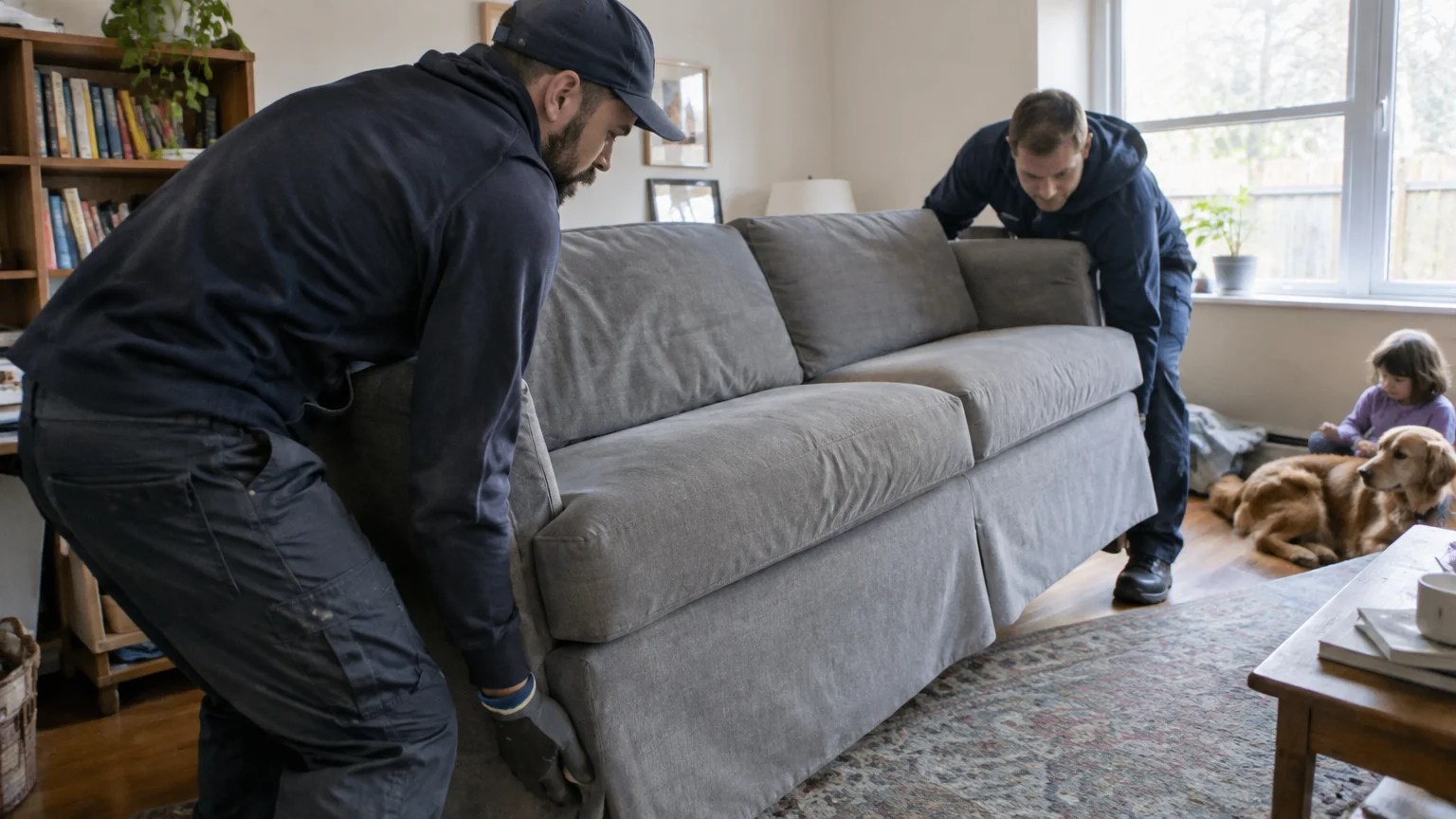
Remove personal items from the cushions, storage areas, and nearby floor. Books, chargers, small electronics, coins, pet toys, and clothing are easy to miss. Move artwork, lamps, tables, and decorations near the route too.
Food, liquids, and sharp objects should not stay inside the couch. They can spill or cause injury during lifting. If the couch has a built-in bed, check the frame and storage space before pickup.
How can you prepare pets, children, and walkways?
Pets and young children should stay away from the work area. A separate room with a closed door is usually safest. Keep walkways free of clutter, wet spots, loose cords, and small items that could cause trips.
Outdoor routes need care too. Unlock gates when appropriate, clear snow or leaves, and keep vehicles away from the loading area. These small steps help the crew work carefully and keep the household calm.
What should you look for in a couch removal service?
A good couch removal service should explain its process, confirm item details, and use safe handling methods. It should also explain access, scheduling, donation, recycling, and disposal. The company should say when an item needs special handling.
Bellingham WA Junk Removal serves property owners who need practical furniture removal support and nearby areas. A local provider may understand common home, apartment, and office access concerns. Each job still needs a clear review.
Which questions help you compare removal providers?
Useful questions focus on the work, not just company claims. Owners can ask:
- Does the service remove sofas, sectionals, sleeper couches, and recliners?
- Can the crew handle stairs, elevators, narrow halls, or gated properties?
- What should the owner prepare before the crew arrives?
- How are usable and damaged couches handled after pickup?
- When is the final cost confirmed on a quote?
- Are building rules or loading instructions needed before scheduling?
The answers should be direct and easy to understand. A provider that avoids basic questions may not be the right fit. Written job details can help both sides agree on the work.
Why do responsible disposal practices matter?
Responsible disposal keeps bulky furniture out of unsafe places. It can give usable items another purpose and help recover materials when local facilities allow it. Dumping a couch beside a road, vacant lot, or full dumpster can create hazards and lead to penalties.
The right provider should match the couch with a realistic next step. Donation works when the item is safe and usable. Recycling may help with certain materials. Disposal is sometimes needed for wet, contaminated, or badly damaged furniture.
Frequently Asked Questions
Can a couch be placed beside the curb for regular trash pickup?
It depends on local collection rules. Many regular trash programs do not accept large upholstered furniture, or they require advance arrangements. Leaving a couch at the curb without approval can create a violation or block walkways. Check the local program or arrange bulky item removal through a qualified provider.
How do people get rid of a couch that is still usable?
A clean, stable couch may be donated, sold, given away, or passed to a reuse group. Describe its condition honestly and confirm that the recipient can accept it. If no reuse option is available, a removal company can explain disposal choices.
Can a junk removal company take a couch and mattress together?
Many providers handle both items during one visit, but they should know about each item first. Mattresses may have different donation, recycling, or disposal rules than couches. Sharing the full list helps the crew plan space, labor, and next steps.
Is it safe for a homeowner to move a couch alone?
Most large couches are awkward and heavy. Moving one alone can cause injury or property damage. A homeowner can clear the room and remove small items, but heavy lifting is usually better left to a trained crew. This is especially true for sleeper sofas, sectionals, stairs, and tight doors.
What are couch removal FAQs most useful for?
Couch removal FAQs help owners understand the process before scheduling service. They cover item types, access, timing, donation, disposal, and preparation. They also show which details a provider needs to confirm the job. Clear answers help owners choose a safe and practical option.
Key Takeaways
- Couch removal costs depend on the work involved, including size, weight, access, labor, and disposal needs.
- Most sofas, loveseats, sectionals, sleeper couches, and recliners can be reviewed for pickup.
- Donation is possible only when a couch is clean, safe, dry, and usable.
- Apartment and office removal may need elevator reservations, loading rules, or building approval.
- Owners should clear the couch, protect the route, and share access details before pickup.
Conclusion
Couch removal is easier when the owner shares accurate details early. The couch type, condition, location, access route, and timing all help shape the plan. Donation may work for clean furniture, while damaged items may need recycling or approved disposal.
Bellingham WA Junk Removal can help homeowners, landlords, office managers, and business owners review options for unwanted couches. Contact us to arrange couch pickup and discuss the next step for your property.